Why Does Vintage Clothing Fit Differently? A Guide to Vintage Sizing


You find the perfect vintage jacket online. The label says Large, you normally wear a Large, so everything should be straightforward. Then it arrives and somehow fits completely differently to the clothes already in your wardrobe. It’s one of the most common things people discover when they start buying vintage clothing: the size on the label doesn’t always tell you very much. A Medium from the 1980s can fit differently to a Medium from the 2000s, while two jackets carrying exactly the same size label can have completely different measurements. So why does vintage clothing fit differently, and how can you make sure you’re buying the right size?
Clothing Sizes Haven’t Always Been the Same
Modern clothing sizes might feel relatively familiar, but sizing has never been completely standardised. Brands have used different sizing systems over the decades, and the dimensions associated with Small, Medium, Large and numerical sizes have changed too. This becomes particularly noticeable when shopping across different eras. A piece from the 1980s was designed and sized for a different clothing market than something produced during the oversized sportswear boom of the 1990s or the fitted silhouettes of the early 2000s. That means it’s better to think of the size on a vintage label as a useful clue rather than a guarantee of how something will fit today.
Different Decades Had Different Silhouettes
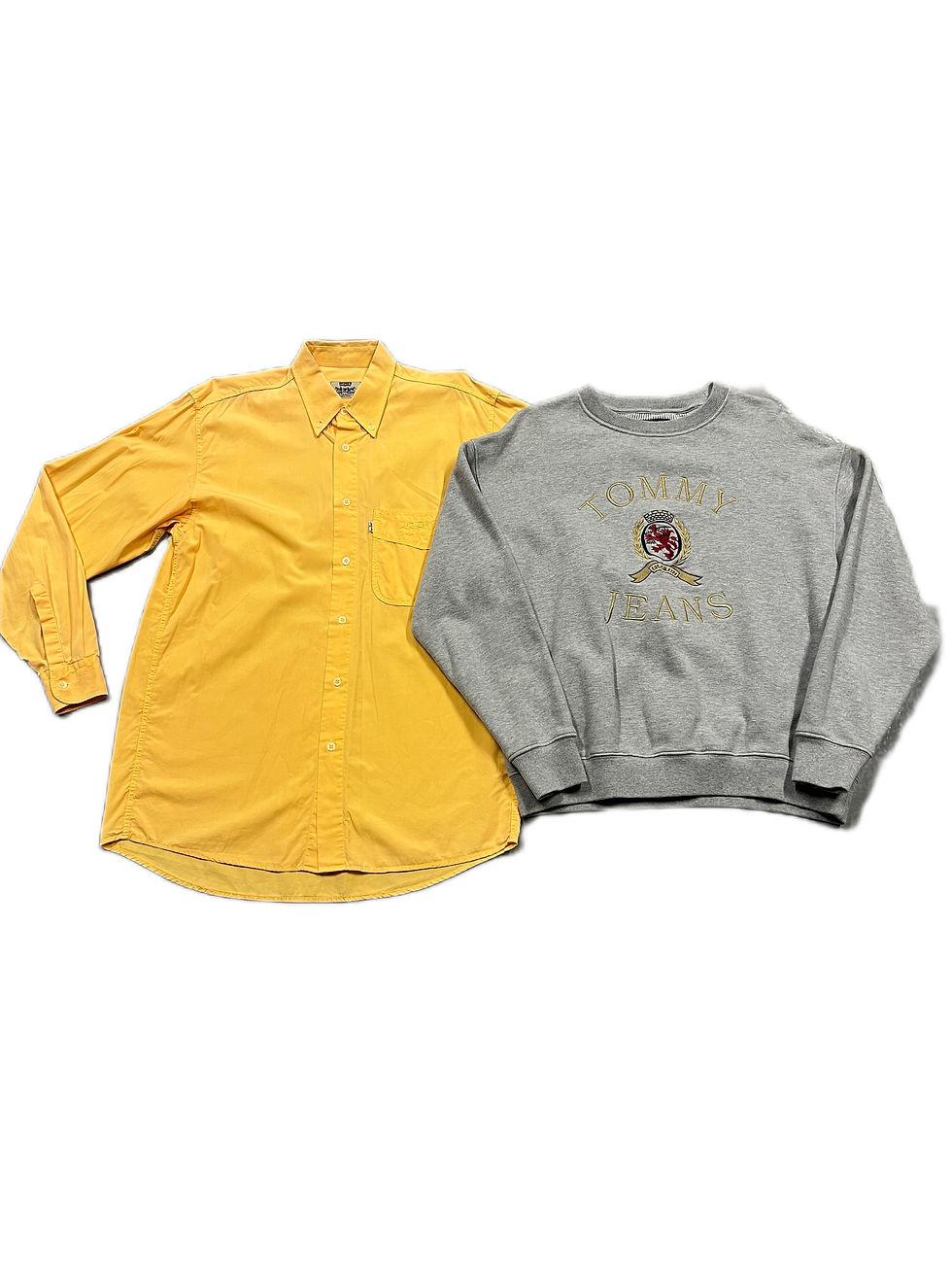
Sizing isn't the only reason vintage clothing feels different. The intended fit of clothing changes with fashion. The 1980s saw plenty of boxy jackets, oversized outerwear and broader shoulders. By the 1990s, relaxed sportswear, baggy denim and oversized sweatshirts had become a major part of everyday fashion. Move into the late 1990s and early 2000s and things change again. Y2K fashion brought fitted tops, shorter jackets, lower-rise trousers and slimmer silhouettes alongside the era's baggier skate, hip-hop and sportswear styles. This is why looking at the era of a garment can be almost as important as looking at its labelled size. A vintage XL jacket isn't necessarily going to resemble the shape of an XL jacket you'd find on the high street today.

Men's and Women's Vintage Sizing Can Be Particularly Confusing
Women's sizing has changed considerably over time, making numerical labels especially difficult to rely on when shopping vintage. A vintage UK Size 12, for example, shouldn't automatically be assumed to fit exactly like every modern Size 12. The same applies to men's clothing. A labelled waist measurement can be useful, but older trousers and jeans may sit at a different point on the body or have a completely different rise and cut to modern equivalents. Then there are unisex pieces, sportswear, military clothing and workwear, where the original sizing system might not resemble modern fashion sizing at all. It's another reason we recommend looking beyond the tag.
Vintage Clothing Has Already Had a Life
There is another factor that's easy to forget: vintage clothing has already existed for years, and sometimes decades. Depending on the fabric and how the garment has been worn, washed and stored, its current measurements may differ slightly from when it originally left the factory. Cotton can shrink, denim can soften and mould to wear, knitwear can change shape and jackets can become more relaxed through years of use. That's part of the character of genuine vintage clothing, but it also means the garment in front of you matters more than what its original label says.
Measurements Are More Important Than the Size Label
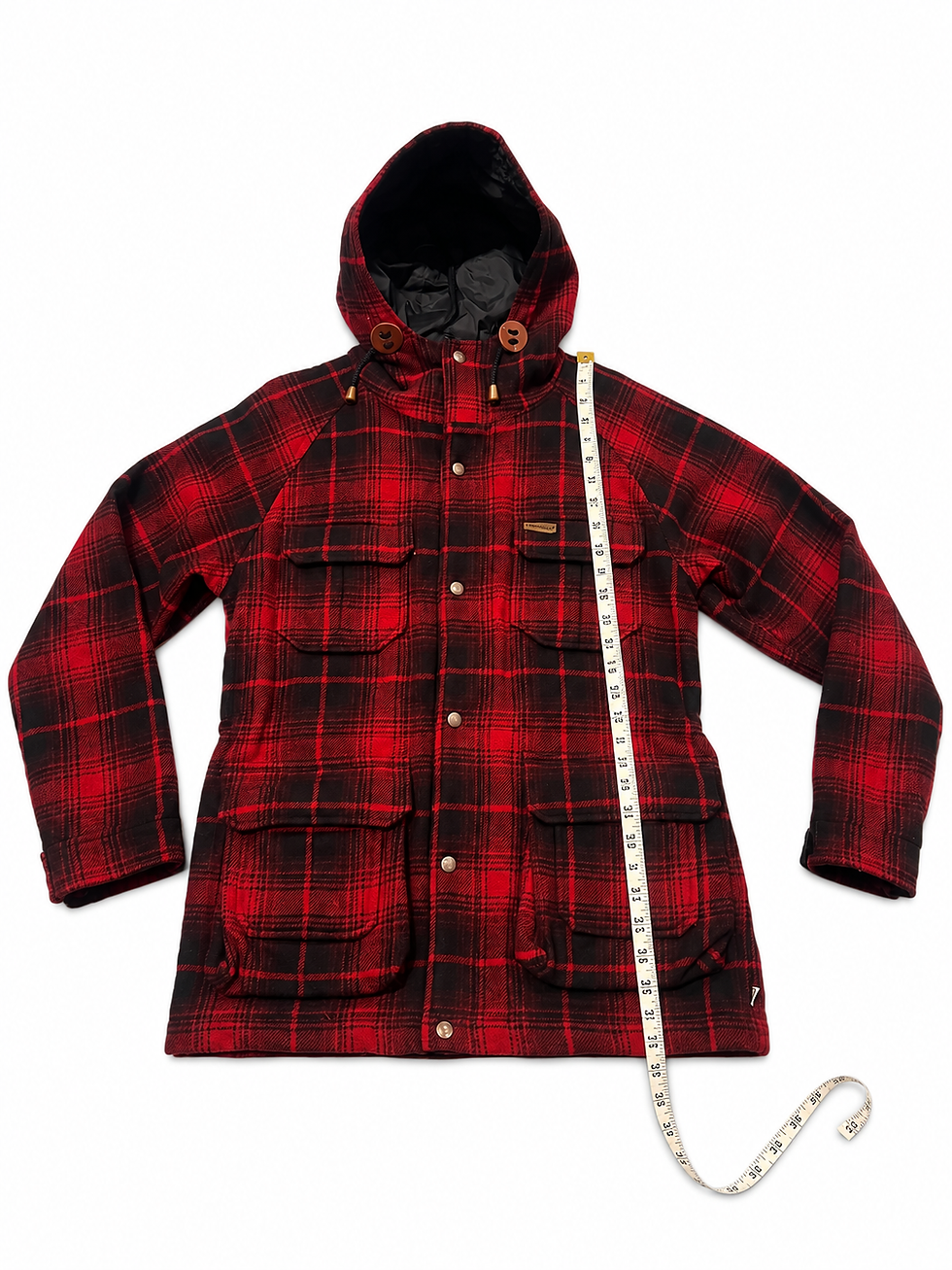
This is the simplest way to make buying vintage online easier, shop by measurements, not just by the labelled size. For tops, sweatshirts and jackets, one of the most useful measurements is pit to pit (P2P). This measures the garment across the chest from one armpit to the other while it is laid flat.
Shoulder to hem gives you an indication of the garment's overall length. For trousers and jeans, look at the waist, inside leg and overall length where available. The easiest way to use these measurements is to take a piece of clothing you already own that fits exactly how you like it. Lay it flat, measure it and compare those numbers with the vintage item you're considering. For example, if your favourite jacket measures 23 inches pit to pit, a vintage jacket measuring around 23 inches pit to pit should give you a much better idea of the fit than simply comparing the sizes printed on their labels.
Don't Be Afraid to Shop Outside Your Usual Size
One of the best things about vintage clothing is that you don't have to stay within the section or size you'd normally shop. If the measurements work for you and you like the silhouette, the number or letter printed on the label doesn't really matter. Someone who normally wears a Medium might prefer the fit of a vintage XL sports jacket. A men's vintage sweatshirt might create exactly the oversized fit someone is looking for, while a fitted Y2K jacket could work several labelled sizes above what they normally buy. Vintage shopping becomes much easier when you start looking at the garment rather than the size category.
Think About How You Want It to Fit
There also isn't necessarily one "correct" size. Do you want a jacket fitted or oversized? Will you be wearing a sweatshirt over a T-shirt or layering it underneath a coat? Do you want your denim loose and baggy or closer to the body? Two people with similar body measurements might deliberately choose completely different garment measurements because they're trying to create different silhouettes. Understanding your preferred fit makes shopping vintage considerably easier.
The Roundrobinclassics Approach to Vintage Sizing
At Roundrobinclassics, we include garment measurements alongside sizing information wherever possible because we know how inconsistent vintage sizing can be. Whether you're buying an oversized 1990s sportswear jacket, an 80s jumper, Y2K denim or vintage workwear, we'd always recommend checking the listed measurements before buying. The size on the label can point you in the right direction. The measurements tell you how the garment actually fits, and once you get into the habit of knowing the measurements of your favourite clothes, buying vintage online becomes a whole lot easier.


Comments